Experts in research estimate they will witness massive dismissals
AGERPRES - Romanian News Agency - 17 Februarie 2009
Numerous research institutes in Romania will dismiss people, most of the projects that started in 2008 will be stopped and Romanian research will be less credible because of the insufficient funds allocated, say researchers.
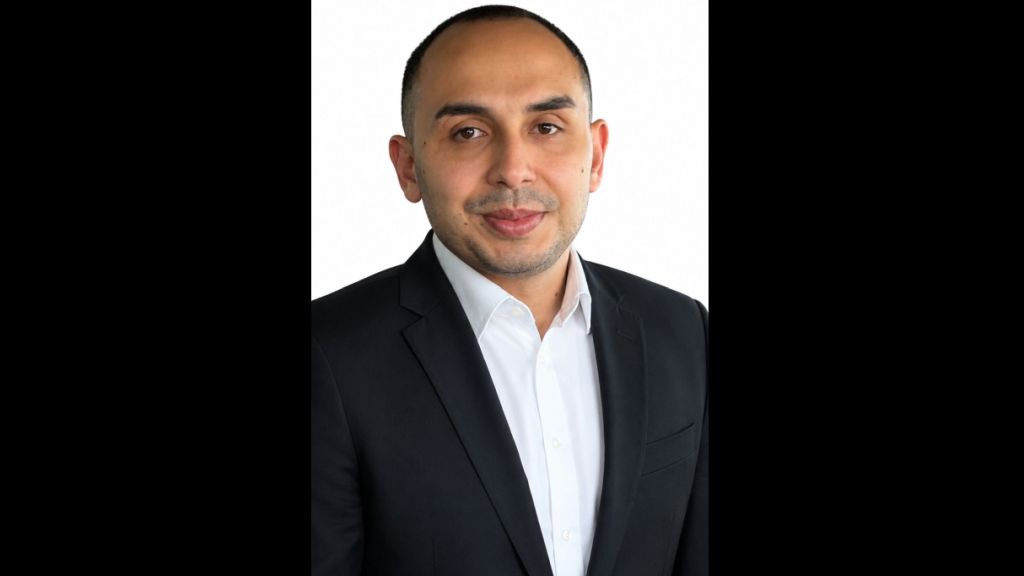
One of the research institutes to face this phenomenon is the Horia Hulubei Institute of Nuclear Physics and Engineering (IFIN). Manager Nicolae Zamfir told Agerpres that more than 300 researchers, technicians and auxiliary staff members were to be dismissed.
'The economic crisis is quite obvious in all countries and fields of activity and Romania and scientific research in this country are no exception. Still, there are fundamental differences of the way this subject is approached by Romania and by other countries. Romanian physicists are not only perfectly aware of the situation of crisis our country is in at present, but they are also concerned with finding solutions for diminishing the effects of this crisis,' says the manager.
He said that the necessary measures in this context are the following: freezing the salaries, stopping the payment of additional work, of bonuses, reducing purchases of materials to one tenth, reducing the participation in international cooperation to a half. All these measures will bring about a reduction of expenses by one third, added Zamfir.
To comply with the budget provisions implies an additional reduction of expenses by one third, which will only come true by dismissing about 300 persons.
In the manager's opinion these reductions may bring about major disturbances such as endangering the participation in the existing great international cooperation (CERN Geneva, FAIR Darmstadt, IUCN Dubna), which will lead to Romania being excluded from the European area of nuclear physics research, thus contributing to the 'dangerous' deterioration of the country's credibility and image by failure to fulfil the pledges taken at the highest level.
Another consequence will be the young researchers leaving the country, which will be an additional deterioration of Romania's image, said Zamfir. He added that the access to modern technologies would be diminished and the institute's scientific output would decrease drastically, which currently amounts to over 300 articles annually only in ISI specialist journals, 10 percent of the whole country's scientific productivity.
The manager says that the long-term losses, which cannot be calculated, are added to all this.
Zamfir mentioned that, at Magurele (near Bucharest), three absolute firsts in East-European science (except for the former USSR) were achieved, firsts that led to the creation of the Romanian school of nuclear physics: the installation and exploitation of the first big nuclear installations (reactor, cyclotron, betatron) in 1956, the first electronic computer in Romania in 1956 and the first laser in Romania in 1964.
Other achievements the institute run by Nicolae Zamfir takes pride in are the nuclear medicine centres in hospitals, the marking of furnaces, the production of isotopes, the heavy water, the nuclear power station.
'Nuclear physics has made its contribution to Romania joining the countries having major scientific and technical performances,' he said.
According to the IFIN representative, if larger funds were allocated to research, they would gain staff and expertise for the future technological developments, opportunities would be created for various sectors of the national economy meant to contribute, with tenders as a basis, to the great international projects, cancer treating hadronic therapies, 'targeted' cancer radiotherapy as well as to a good international visibility for Romania.
'We hope that a careful examination of the situation by the decision-making factors will bring about the allocation of the financial means necessary for continuing nuclear physics research under favourable circumstances,' said Professor Nicolae Zamfir, DSc, a corresponding member of the Romanian Academy.
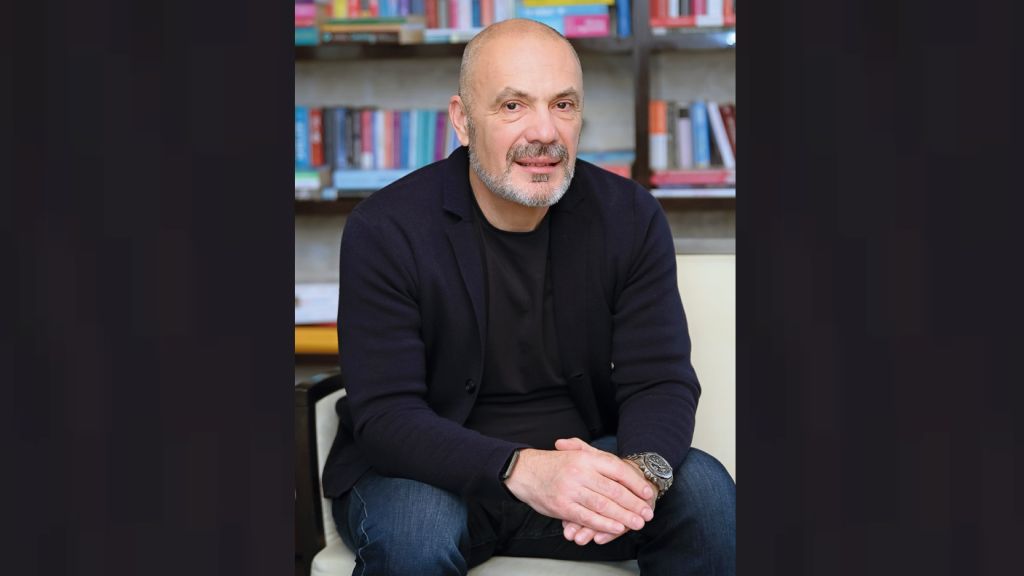
In his turn, manager of the National Institute of Research Development for Machines and Installations Meant for Agriculture and Food Industry (INMA) Ioan Pirna said that he had to reduce the staff of the institution he had been running by 30 percent, which amounts to almost 45 people.
Referring to the money allocated to research institutes, the manager said that the results of investments were only visible three years after the money were allocated. 'The budget that is to be given to research this year is worse than one for catastrophic situations as it cannot even ensure the preservation of the research nucleuses that takes about 10 years to be created,' said Pirna. In his opinion a decrease in salaries will make the researchers leave and take the first concrete offer and the career of a researcher will become totally unattractive.
INMA is acknowledged by the Ministry of Labour and notified by the European Commission for the evaluation of the conformity of several industrial machines and safety components.
The above-mentioned institute won several diplomas and medals in international competitions in 2008: gold medal at the International Invention Show in Geneva, gold and silver medals at the international show of inventors in Zagreb, Croatia, two gold medals at the International Inventics Show in Bucharest, a gold medal and two silver ones at the EUREKA 2008 International Invention Show in Brussels, a silver medal at the Proinvest International Inventics Show in Cluj-Napoca (central Romania).
Over 2005-2007 they won 23 international prizes and published 175 contributions in specialist journals.
According to the manager, the laboratories of this institute have been equipped in the past few years and can bear comparison to the ones in the EU. 'Every year we buy new equipment. The products made here could be used in 6 million farms in Romania,' he explained.
A great achievement of the team working with the institute mentioned before will be the launch, within 60 days, of the first entirely Romanian made pilot station producing biodiesel and biomass, which could make farmers independent so that they themselves should produce the fuel they need.
'Together with the Research Institute for Electric Engineering Products we are working on a system for this station, which should be able to use photovoltaic energy,' said Pirna.
He made it clear that 27 companies in Romania carried out their activity using the products of the above-mentioned institute and added that the prices of the Romanian made products were 5 to 7 times lower than the ones in other European states.
The target of the institute for 2009 is the make equipment and technology for locally processing farm produce. With their help farm produce will be cleaned, washed, packed.
Some of the achievements of the institute in 2008 are an equipment improving the airing conditions, the water permeability, precipitation storage, favoring the development of a more profound radicular system and intensifying the biological activity in the arable substratum of the culture solutions.
This equipment reduces manpower and fuel consumption by 3 percent and increases the level of the turnover of the business by about 15 percent.
One of the achievements of the year 2008 the institute is proud of is the system of super-intensively breeding fish in a recirculating system.
Vice-president of the National Authority for Scientific Research Alexandru Aldea says that the 65 percent diminution of the budget allocated to research in 2009 as against the one allocated in 2008 will require the dismissal of 30-35 percent of researchers.
'Young people will leave for foreign countries, the profession of researcher becoming totally unattractive in Romania. Thus, the programmes for a doctor's degree in the human resource in research and innovation turn quite absurd. The national plan of research by human resource programmes, fundamental research, applicative research, purchasing research and innovation infrastructure includes contracts signed with research groups that cannot be honoured. As a rule every year they open new competitions by programmes requiring additional sums of money and it is clear that they cannot be financed either. The loss of the human resource is a disaster, it is a loss of confidence, nobody is going to take up research any more,' said Aldea.
He said that other repercussions of the small fund allocated to research consisted in some installations of national interest not being used: the network of earthquake warning (connected to the international network), the Mare Nigrum marine research ship, the virology research base of the Cantacuzino Institute, the radioactive wastes treating station, the aerodynamic experiment laboratory.
The technical examinations of the Bystroe Canal and the Black Sea continental shelf as regards Serpent Island, the centre for information safety, predictions referring to safety research in mining, predictions referring to unemployment and the evolution of the manpower, participation in the CERN research and many others will no longer be financed, said Alexandru Aldea too.
Minister of Education, Research and Youth Ecaterina Andronescu said that the budget allocated to research for the year 2009, 0.19 percent of the GDP, was 'far from being satisfactory.'
'I hope to be able to increase this budget allocated to research during the talks to be held in Parliament. Some more funds will be allocated to research on the first budget revision in June,' said the Minister of Education.
Sursa: http://www.rompress.ro
Tags: research
about
international
budget
which
national
first
percent
scientific
manager
allocated
romanian
romania
researchers
institute
physics
nuclear
zamfir
Articole similare
facebook
twitter
linkedin
youtube
rss
newsletter