Moody’s: East Europe banks crisis weighs on bank ratings
Nine o'Clock - 18 Februarie 2009
Moody's report, ‘West European ownership of East European banks during financial and macroeconomic stress', observes that after years of strong economic growth, East European countries - the region includes Central and Eastern Europe (CEE), South-Eastern Europe (SEE) and the Commonwealth of Independent States (CIS) - have now entered a deep and long economic downturn, thus exposing West European banks' claims on East European institutions.
Moody's acknowledges that whilst East European countries differ in terms of vulnerability, the investment grade countries exhibiting the highest external vulnerability tend to be those displaying sizeable fiscal deficits, i.e. Baltic countries, Hungary, Croatia, Romania and Bulgaria. Nonetheless, the rating agency also notes that several countries in the region, including Ukraine, Kazakhstan and Russia, are under pressure even though their public sectors have relatively little external debt.
The Austrian banking system, most exposed
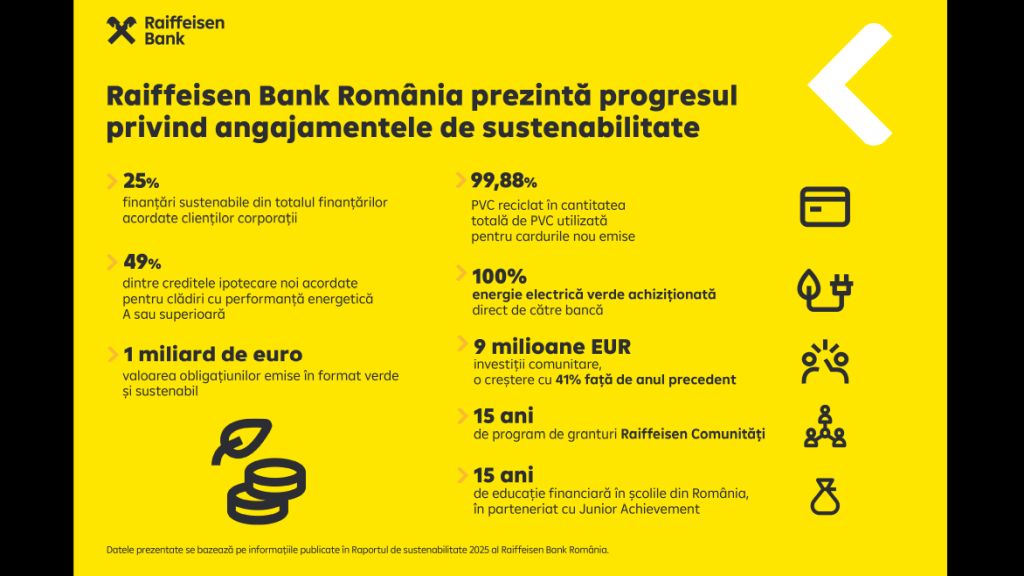
West European parent banks of East European subsidiaries are primarily located in six countries - namely, Austria, Italy, France, Belgium, Germany and Sweden - which account for 84% of total West European banks' claims on Eastern Europe. Moody's observes that from a creditor point of view, the Austrian banking system is most exposed as Eastern Europe accounts for nearly half of that country's global bank claims. Italy's claims account for 27% of the total (mostly concentrated in Poland and Croatia), whilst Scandinavian banks claim the vast majority of the Baltic States' banking systems. The rating agency also indicates that the activity of West European banks in Eastern Europe concentrates on very few banking groups, with Raiffeisen, Erste Bank, Societe Generale, UniCredit and KBC representing the strongest and most widely present Western players in the region, and this concentration, in turn, presents further rating implications.
Modernized banking systems in Eastern Europe have only emerged over the past two decades and have not yet reached a similar level of maturity as their West European counterparts; this makes them more vulnerable in times of stress. The current challenging operating environment in Eastern Europe has already resulted in a significant number of negative rating actions for banks operating in this region. Moody's expects continuous downward pressure on East European bank ratings as a result of weakening financial metrics predominantly driven by deteriorating asset quality and vulnerable liquidity positions.
A widespread deterioration in the economic health of core markets in Eastern Europe is exerting negative rating pressure on subsidiaries' and eventually may also lead to a weakening of the parent bank's ratings assuming East European activities represent a significant part of total banking activities of the parent.
Stocks hit 2-week low
World stocks fell to a two-week low on Tuesday, and government bonds and gold surged as concerns about the economy and corporate profit intensified, while worries about deterioration in Eastern Europe hit the euro.
Investors grew worried about the health of European companies after L'Oreal, the world's biggest beauty products group, late on Monday posted full-sales growth below its twice-revised target and steered clear of giving guidance for 2009, Reuters informs.
The common currency hit a two-month low against the dollar after credit rating agency Moody's said the recession in the emerging economies of Europe was likely to be more severe than elsewhere. This would put the financial strength rating of local banks and their Western parents under pressure. "People are beginning to speculate that East Europe is maybe the euro zone's subprime," said Adam Cole, head of FX strategy at RBC Capital Markets.
Sursa: http://www.nineoclock.ro
Tags: europe
european
banks
eastern
rating
banking
countries
ratings
moodys
euro
Articole similare
facebook
twitter
linkedin
youtube
rss
newsletter