BNR news conference : Impact of VAT increase on inflation is 2.4% in September
ACTMedia - 5 Noiembrie 2010
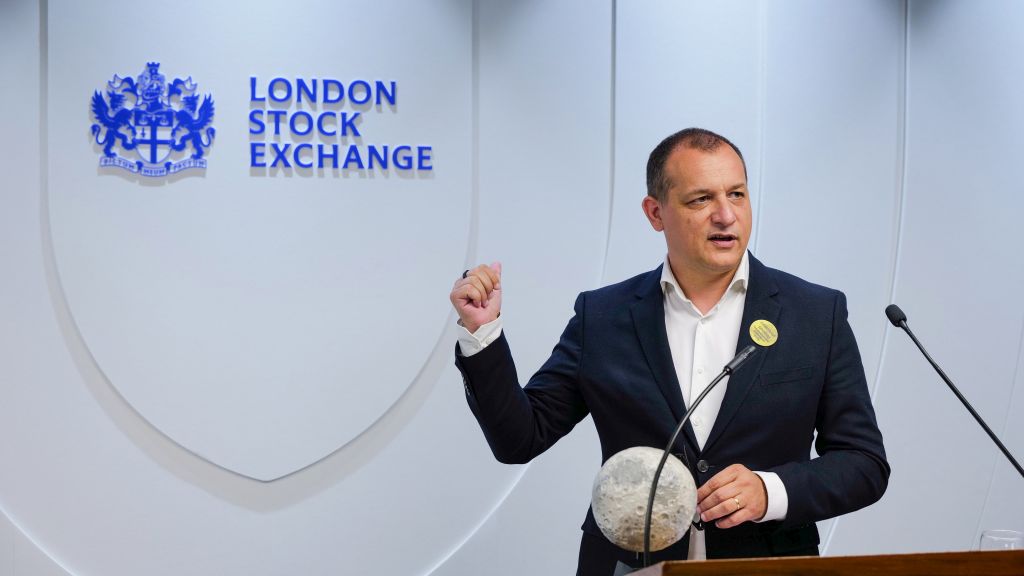
The impact of the VAT increase on the annual inflation rate is 2.4 percent in September 2010, said Governor of the National bank of Romania (BNR) Mugur Isarescu on Thursday when presenting the quarterly report on inflation.
'The first determinant of inflation was the VAT increase to 24 percent from 19 percent. The impact of the VAT increase on the annual inflation rate is 2.4 percentage points in September,' said Isarescu.Inflation might go down to 3.4 percent in 2011
Inflation will go down to 3.4 percent in 2011 (December 2011-December 2010) from 8.2 percent, the level estimated for December 2010, said Governor of the National Bank of Romania (BNR) Mugur Isarescu on Thursday when presenting the report on inflation for the third quarter. 'Inflation will go down to 3.4 percent in 2011 from 8.2 percent, as it was in December 2010,' said Isarescu. The inflation projection for 2010 will be 8.2 percent, 3.4 percent above the value in 2009, and 0.4 percent above the one announced for August 2010, according to the quarterly report on inflation.
Romania Central Bank Says Consumer Credit Growth Limited
Romanian central bank governor Mugur Isarescu Thursday said local bankers shouldn't have illusions about being able to resume consumer lending at pre-crisis levels, adding that the banks should focus on corporate loans instead.'I don't think (the banks) can find a wide enough scope to increase consumer lending, because those who are eligible to obtain loans have already borrowed money,' Isarescu told a news conference.'Therefore, the banks must not have any illusion as to finding a substantial market (...) comparable to the one in 2006-2008, regarding both consumer and mortgage lending,' he added.
Isarescu said consumer lending would probably remain stable or increase only marginally in the coming future, mentioning the banks should increase lending in the corporate sector and extend more credit lines to projects that receive European co-financing.
Romanian Lenders Pay Excessive Interests On FX Deposits
Romanian lenders pay surprisingly high interests on foreign currency deposits compared to international rates, central bank governor Mugur Isarescu said Thursday.'There are banks that pay 4% to 5% interest on hard currency deposits. I think they are very generous,' Isarescu told a news conference. 'A possible explanation is that they're fighting over customers,' he added.Another element that may allow bankers to pay high interests could be that they still find debtors who accept to pay large interest loans, he said.Isarescu said the central bank is 'worried' about the lenders' capacity to cover such high interests.'We've asked them how the banks will be able to produce enough income to cover such generous interests (...). On the international markets, one can barely get 1% for hard currency deposits,' he said.The central bank official mentioned local bankers replied that they would pay the same 4% interest if they were to borrow from international markets, because of Romania's high credit default swaps (CDS).'This isn't an issue we can neglect, because it's true,' Isarescu said. He added Romania's CDS trades 300 basis points above mid-swaps, despite its small public debt, of around 30% of the gross domestic product.Still, the local banks have enough room to lower their interests on foreign currency deposits by one to two percentage points, Isarescu said.
Romania Central Bank To Ensure Consumer Loan Ordinance Complies With EU Norms
Romania's central bank will make a public presentation at the debates regarding the government ordinance 50/2010 on consumer loans to ensure the act complies with the European directive in the field, central bank governor Mugur Isarescu said Thursday.'We will make a public intervention (...) during this debate which has turned away from a normal framework,' Isarescu told a news conference. 'We don't need excesses,' he added.Isarescu said some of the stipulations of the ordinance 50, which transposes an EU directive on consumer loans into the local legislation, are not included in the EU norms and they 'shouldn't be there.''Had we've been consulted sooner, I believe we could have avoided many of the superfluous issues,' he said.Romanian government adopted in June an emergency ordinance regarding consumer loans, which transposes the EU's 2008/EC/48 directive into the local legislation. The new act applies to existing loans and the banks denounced the measure as abusive.
Officials of the European Commission and the International Monetary Fund repeatedly insisted Romania changed its consumer loan ordinance so it doesn't endanger financial stability.
According to a Commission statement on November 1, the government 'agreed to work with the parliament to ensure that emergency ordinance 50 of 2010 improves transparency and protects consumer rights, while also safeguards the stability of the financial system.
'They will also ensure that the National Bank remains the only agency authorized to regulate banks' lending activity,' it added.
Romania May Delay Euro Adoption If Fiscal Consolidation Unsuccessful
Romania should be ready to postpone the target for euro adoption if the government's fiscal consolidation measures don't receive social support over the next months, central bank governor Mugur Isarescu said Thursday.'We haven't changed our 2015 target and we still stand by it, even if it needs examination, but the realistic chances to enter the eurozone depend on Romania's ability to undergo fiscal consolidation,' Isarescu told a news conference.'We need a few more months to see how the fiscal adjustment costs are accepted and whether we keep the 2015 deadline or not,' he added.
Isarescu didn't say how much further in time the deadline would be pushed, but mentioned 2018 would be a too long period. Romania wants to adopt the euro in January 2015, but its plans might be put off because of weak economic performance.
In March, the International Monetary Fund said Romania could adopt the European currency later than planned, adding that the country needs to consolidate its monetary and fiscal policies to stay on track.
Moreover, Isarescu said recently the bank should reexamine its target for euro adoption to see whether the deadline was still feasible.
Isarescu Says Puzzled By Local Fuel Price Evolution
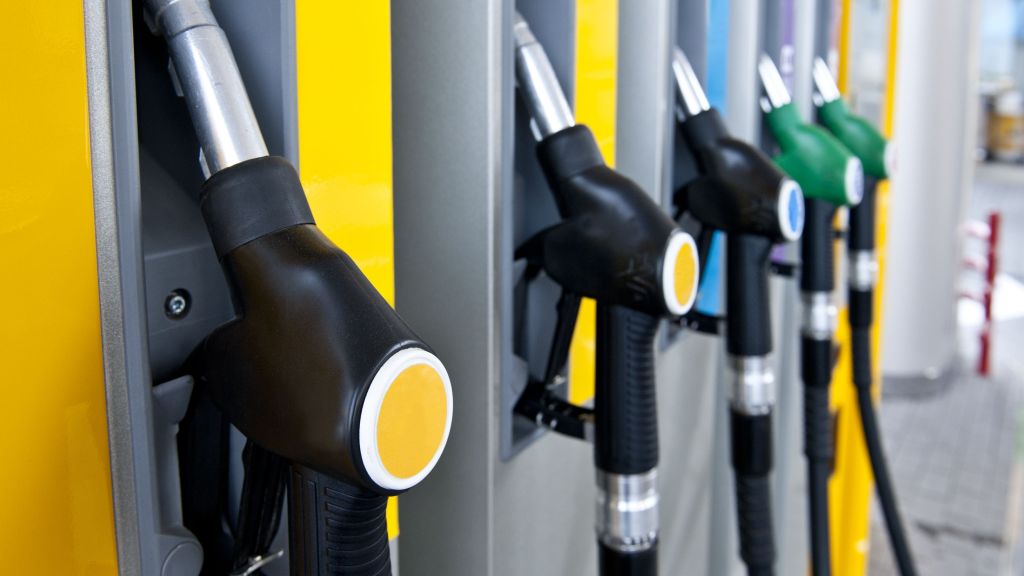
Romanian fuel prices are not linked to the evolution of the main factors that are supposed to influence their trajectory, central bank governor Mugur Isarescu said Thursday. The central bank 'doesn't quite understand the logic behind the evolution of fuel prices on the domestic market,' Isarescu said at the presentation of the third-quarter inflation report. 'The (price) fluctuations are too wide and we can't find an explanation other than they must be influenced by divergent factors,' he added. Isarescu said fuel prices have gone up, if only temporarily, even when the leu markedly strengthened against the US dollar, as international oil prices did not justify such an increase on the local market.
Sursa: http://www.actmedia.eu
Tags: isarescu
banks
loans
lending
local
added
interests
ordinance
fiscal
international
currency
deposits
romanian
consumer
inflation
september
increase
impact
conference
bnr
percent
central
thursday
mugur
governor
romania
euro
Articole similare
facebook
twitter
linkedin
youtube
rss
newsletter