OECD: Informal employment in Romania estimated at 20 to 50 percent
ROMPRES - Romanian News Agency - 16 Iulie 2008
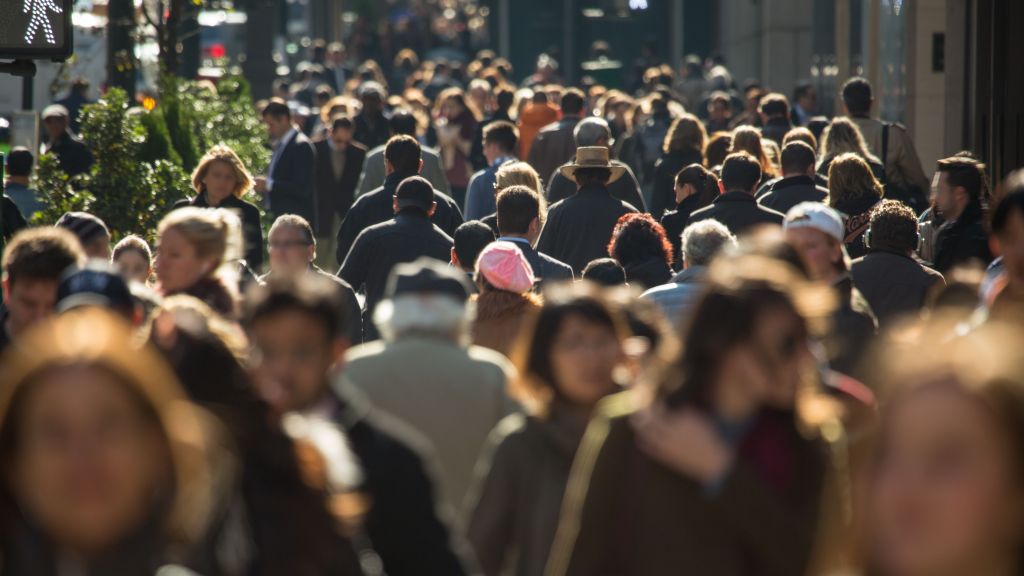
Informal employment stays a reality in Romania despite the economic growth in the latest years, representing between 20 and 50 percent of the total employment, according to a country report on informal employment made public by the Development Centre (DEV) of the Organisation for Economic Cooperation and Development (OECD) here on Tuesday.
The informal employment represents the number of jobs which do not fully meet the relevant law. In Romania, such jobs are to be found in the subsistence farming area, with such employees who do not declare their incomes, employers who do not register their employees, workers without a labour agreement, tax evasion and social security evasion, declaration of smaller amounts than actually received, false independent activity.
According to Johannes Juttnig, principal coordinating economist with DEV, Romania can be compared in terms of informal employment with such countries as Mexico or Turkey, ranking on better positions than China, with 50 percent informal employment and India, 90 percent.
The OECD official drew attention to the seriousness of the phenomenon and underlined that the economic growth alone will not solve the problem of the informal employment, which determines the diminishing of the state revenues and, as a consequence, less possibilities to solve problems in terms of infrastructure and public services, as well as vulnerability in the case of certain categories of people, economic shocks and poverty.
In Europe, Romania occupies a middle position at this chapter, faring better than Ukraine, Russia, Georgia and worse than Slovakia, Czechia and Slovenia, DEV-OECD economist Theodora Xenogiani said.
The causes of the phenomenon are divided into three large categories: social-economic factors such as the lack of registered jobs, restructuring of certain economic sectors, unemployment, poverty, inequalities, institutional factors such as the fiscal and social security systems, institutional infrastructure, public administration, bureaucracy, quality of the public services and social and behavioural factors, such as the limited trust in the state and its institutions.
The OECD report recommends the support of the benefits in the formal employment, such as the low taxes, the simplified administrative procedures, the correlation of the benefits of the social security schemes and health insurance with the level of the contribution, the professional training programmes, the drafting of the policies in a way to discourage informal employment, consolidation of the population's trust in the public institutions, respectively less bureaucracy, less corruption, better public services, information campaigns.
The National Institute of Statistics (INS) estimates the underground economy in Romania accounts for 21 percent of the GDP, with the USAID figures indicating the level of the 'hidden economy' up to 45 percent of the GDP.
According to the investigation on labour force, the two main sectors of the economy where people work without labour agreements were production and the wholesale and retail trade, 21.4 percent and 21.7 percent respectively, followed by the construction sector, 15.1 percent, agriculture, 8.8 percent, public administration, 7.7 percent, real estate, 4.8 percent.
Sursa: http://www.rompress.ro
Tags: employment
percent
social
public
economic
informal
romania
facebook
twitter
linkedin
youtube
rss
newsletter